
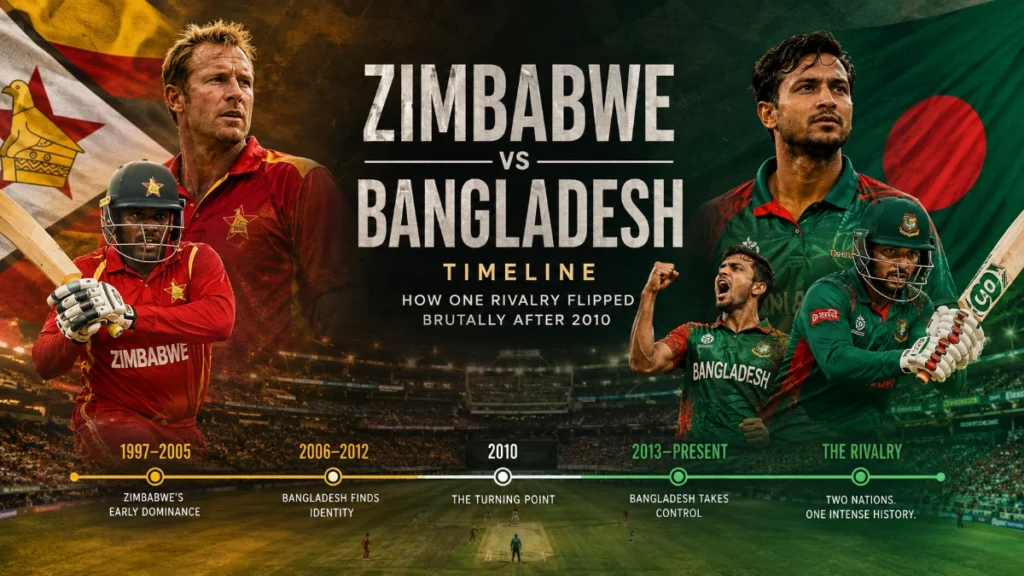

From Early Zimbabwe Control to Bangladesh’s Modern Dominance
The zimbabwe vs bangladesh national cricket team timeline tracks a clear swing in control: Zimbabwe held the early edge in the late 1990s and early 2000s, while Bangladesh has asserted consistent superiority across formats since around 2010, built on stronger spin attacks, deeper batting, and sharper game awareness. This rivalry is effectively a case study in how one side evolved tactically while the other stalled structurally.
Early Phase: Zimbabwe’s Structured Superiority (Late 1990s–Mid 2000s)
Zimbabwe started this rivalry as the more settled, tactically aware side, routinely outplaying Bangladesh with disciplined seam bowling and more reliable batting in both Tests and ODIs.
Tactical Shape of Zimbabwe’s Early Edge
Zimbabwe’s early advantage came from structure rather than raw flair. They fielded bowling units that understood length control, used seamers to attack the stumps, and backed that up with batters willing to play time rather than chase tempo too early. Bangladesh, by contrast, often looked like a team still learning international cricket on the job.
Zimbabwe’s Bowling Discipline vs Bangladesh’s Early Fragility
In the early phase of the rivalry, Zimbabwe’s new-ball attacks tended to target off-stump channels, forcing Bangladesh’s top order into defensive uncertainty and loose drives. Bangladesh’s responses were frequently flawed: openers played away from the body, middle-order batters lacked clear plans against movement, and collapses after two quick wickets were common. That pattern wasn’t a talent problem; it was a tactical and mental one.
Bangladesh’s Batting Instability and Defensive Captaincy
Bangladesh often shuffled the batting order in search of something that worked, which deepened their problems instead of solving them. Captains leaned on defensive fields even when wickets were needed, choosing containment over calculated aggression. That conservative approach allowed Zimbabwe to build partnerships at low risk, soak pressure, and then accelerate once Bangladesh’s bowlers tired.
Transition Phase: Bangladesh Finds an Identity as a Spin-First Side (Mid 2000s–2012)
The middle chapter of the zimbabwe vs bangladesh national cricket team timeline is defined by Bangladesh finally deciding what kind of team they wanted to be: a spin-centric, pressure-controlling unit that uses conditions and all-rounders as genuine weapons.
Why Spin Became Bangladesh’s Strategic Lever
Bangladesh made a deliberate call to build around spin depth, especially at home. Instead of chasing a carbon-copy fast-bowling model seen in larger cricket nations, they leaned into slow bowling and lower-pace surfaces. That was not just pragmatic; it was smart. It gave Bangladesh something unique to lean on in this rivalry and beyond.
Middle-Overs Control Through Spin
The biggest tactical shift came in the middle overs of limited-overs matches. Where Zimbabwe historically drifted between overs 20–35, Bangladesh’s spinners began to choke scoring options—using tight lines, packed ring fields, and variations in pace to turn seemingly comfortable chases into tense stalemates. That change is the single biggest reason Bangladesh moved from being reactive to being controlling.
All-Rounders and Match Balance
Bangladesh’s investment in genuine all-rounders added balance that Zimbabwe struggled to match. When players who could bowl 10 overs and contribute 40–50 runs became central to Bangladesh’s plans, they gained flexibility in selection and in-game tactics. Zimbabwe’s squads, lacking similar multidimensional players, were more rigid and more exposed when one specialist failed.
Zimbabwe’s Structural Decline and Loss of Identity
At the same time, Zimbabwe’s cricket structure weakened. Selection became inconsistent, experienced players left gaps that weren’t filled sustainably, and the team often looked like a patchwork XI rather than a coherent unit. In this rivalry, that decline translated into fewer sustained series performances and more isolated upsets with no broader pattern.
Captaincy and Planning Gaps
Zimbabwe’s captains and coaches repeatedly struggled to define clear plans for the Bangladesh challenge. Attacking spin with purpose was rare; instead, batters often absorbed pressure without rotating strike, leading to rising dot-ball counts and inevitable mistakes. Field settings frequently failed to reflect match context, with defensive placements used in situations that demanded proactive wicket-hunting.
Modern Era: Bangladesh Takes Firm Control (2013–Present)
In the modern era, Bangladesh has become the more complete side in this rivalry, consistently outplaying Zimbabwe in ODIs and T20Is and often holding the psychological edge before the first ball is bowled.
Why Bangladesh Became the Better Team
Bangladesh’s superiority is built on three pillars: spin control, batting depth, and game awareness. The team now approaches matches with clearer roles—openers set platforms, middle-order batters consolidate and finish, and bowlers attack specific phases rather than simply bowling out overs. Zimbabwe, meanwhile, still oscillates between aggressive bursts and passive periods, a volatility that undermines their competitiveness.
Batting Depth and Middle-Order Maturity
Bangladesh’s middle order has grown into a genuine strength. Where early-era sides folded after top-order failures, the modern Bangladesh XI often absorbs early damage, rebuilds through controlled strike rotation, and then launches late. This evolution directly contrasts with Zimbabwe’s tendency to crumble once two or three wickets fall, particularly when chasing.
Bowling Balance and Phase-Based Plans
Bangladesh now uses bowlers in defined roles: powerplay seamers tasked with swing and early control, spinners deployed to strangle the middle overs, and death bowlers instructed to protect boundaries more than hunt miracles. That clarity of plan is a major tactical advantage and explains many of their controlled wins against Zimbabwe.
Zimbabwe’s Isolated Fightback Moments
Zimbabwe’s best performances in this modern phase usually come in T20Is or single ODIs where they commit to aggressive batting from the outset. When their top order attacks spin and refuses to get bogged down, they can disrupt Bangladesh’s preferred control script. The problem is that this approach surfaces sporadically rather than forming a coherent identity.
Inconsistent Risk Management
Zimbabwe’s risk-taking is often poorly calibrated. They either swing recklessly across the line early and gift wickets, or they retreat into overly cautious batting that lets Bangladesh’s spinners dominate. The absence of a consistent middle ground—targeted aggression against specific bowlers or overs—remains a costly tactical flaw.
Head-to-Head Shape Across Formats
While precise numbers can vary over time and need confirmation from official statistical databases, the pattern of the zimbabwe national cricket team vs bangladesh national cricket team timeline across formats is clear: Zimbabwe held an early edge, but Bangladesh now leads or competes strongly in most categories.
Tests: Sparse Meetings, Shifting Balance
Test meetings between these sides have been limited, but the qualitative trend is that Zimbabwe’s early experience gave them an advantage, which later narrowed as Bangladesh gained greater comfort in the five-day format. Bangladesh’s spinners have become more influential over time, and their batters now show more patience across sessions than they did in the early years.
Zimbabwe’s Early Test Edge
Zimbabwe originally benefited from a core of batters willing to occupy the crease for long periods and seamers capable of exploiting helpful conditions. Bangladesh, new to Test cricket, often struggled with shot selection and the discipline required for long innings, leading to frequent collapses.
Bangladesh’s Gradual Test Maturity
As Bangladesh’s Test side matured, they began to treat Zimbabwe as an opportunity to assert their own long-format progress. Longer partnerships, more calculated innings-building, and more effective use of spin across four sessions allowed them to move from surviving to genuinely competing for control.
ODIs: The Central Arena of the Rivalry
ODI cricket has been the main stage for the rivalry. Bangladesh, once comfortably second-best, has become the side more likely to dictate terms, particularly in bilateral series.
From Chasers of Respectability to Series Contenders
Bangladesh’s ODI evolution transformed them from hopeful underdogs chasing credibility to legitimate series contenders against Zimbabwe. As their batting depth improved and their bowling units gained cohesion, they began to win not just one-off matches but complete series.
Zimbabwe’s ODI Struggles
Zimbabwe’s ODI issues against Bangladesh often follow a repeatable script: promising starts dissolve in the middle overs, dot-ball pressure escalates, and chases either stall or end in collapses. When they bowl, inconsistent lengths and lack of clear phase plans allow Bangladesh’s batters to recover from early setbacks.
T20Is: Volatility and Opportunity
T20Is offer Zimbabwe their best chance to disrupt the hierarchy, because the format’s volatility compresses the impact of structural weaknesses and rewards short bursts of excellence.
Zimbabwe’s Pathway in T20s
When Zimbabwe commits to attacking early, uses powerplay smartly, and puts Bangladesh’s bowlers under sustained pressure, they can flip narratives in individual matches. Their challenge is consistency: replicating that aggressive template across a series rather than treating it as a one-off gamble.
Bangladesh’s T20 Edge
Bangladesh enjoys an edge in T20s mainly due to experience and situational awareness. Their batters better understand target pacing and risk management, while their bowlers are more accustomed to planning specific match-ups. That accumulated knowledge often shows in tight finishes where small margins matter.
Series / Fixture Context Table
To give readers a quick, scannable sense of how this rivalry plays out across series, here is a high-level fixture-style context table that should be cross-checked against official stats before publishing.
| Series Type | Era Focus | General Outcome Trend |
| Bilateral ODI series | Late 1990s–mid 2000s | Zimbabwe often ahead |
| Bilateral ODI series | Post-2010 | Bangladesh generally on top |
| Bilateral Test series | Mixed | Balance shifting toward Bangladesh |
| Bilateral T20I series | Post-2010 | Often competitive, Bangladesh edge |
Records and Rivalry Narrative
Numbers alone don’t fully define the zimbabwe national cricket team vs bangladesh national cricket team timeline. The rivalry’s texture comes from repeated patterns of execution, pressure management, and tactical decision-making.
Bangladesh’s Dominant Themes
Bangladesh’s modern control rests on three recurring themes: spin strangulation, middle-order resilience, and clear roles for bowlers. These elements show up again and again in matches that swing their way.
Spin as a Weapon, Not Just a Skill
Bangladesh’s spinners don’t simply bowl overs; they run tactical campaigns against batting line-ups. Fields are set to invite singles in low-risk zones while cutting off boundaries, and bowlers change pace and flight constantly. Zimbabwe’s batters have too often responded with passive defense, which hands advantage to the bowling side.
Middle-Order Responsibility and Calm
The current Bangladesh middle order rarely panics after top-order failures. Instead, they rebuild through singles, twos, and smart manipulation of angles. That calm presence under pressure contrasts sharply with Zimbabwe’s more frequent tendency to either freeze or swing wildly.
Zimbabwe’s Persistent Weak Points
Zimbabwe’s issues in this rivalry are not subtle, and they repeat enough to be called out bluntly: slow scoring in the middle overs, poor rotation against spin, and inconsistent strategic risk.
Dot-Ball Pressure and Collapse Patterns
When Zimbabwe faces Bangladesh’s spinners, dot-ball counts routinely rise. Rather than responding with clear, low-risk scoring options—sweeps, nudges, calculated strikes down the ground—Zimbabwe often gets stuck. That build-up of pressure leads to rash shots, and collapses that turn controlled positions into crises.
Tactical Decisions That Cost Them Matches
Zimbabwe has too often set defensive fields when wickets were needed, persisted with bowlers clearly losing control, or delayed key bowling changes. Those decisions are not mere footnotes; they have directly contributed to losing matches they could have contested harder.
Powerplay vs Middle-Overs Comparison Table
This rivalry is heavily shaped by how each side handles powerplays and middle overs. Here is a conceptual comparison that highlights the tactical differences in those phases.
Needs verification before publishing — figures below are placeholders.
| Phase | Bangladesh Typical Approach | Zimbabwe Typical Approach |
| Powerplay | Controlled aggression, risk managed | Mixed aggression, occasional recklessness |
| Middle overs | Spin-led control, strike rotation | Higher dot-ball count, pressure build-up |
| Death overs | Targeted hitting, boundary focus | Variable intent, inconsistent execution |
Biggest Tactical Mistakes Zimbabwe Made in the Rivalry
One of the clearest storylines in the zimbabwe national cricket team vs bangladesh national cricket team timeline is how Zimbabwe repeatedly undercut themselves through preventable tactical errors.
Misreading Spin and Conditions
Zimbabwe has often misjudged conditions in matches against Bangladesh, particularly in limited-overs games where slow surfaces and turning pitch behavior were obvious. Instead of structuring line-ups and strategies around those realities, they have sometimes stuck to generic plans.
Failing to Plan for Spin Phases
There have been numerous instances where Zimbabwe’s batters approached Bangladesh’s spinners without a clear scoring blueprint. When a team walks into a known spin-heavy phase without rehearsed options—preferred scoring shots, safe zones, and rotation patterns—they almost invite trouble.
Inconsistent Intent Across Innings
Zimbabwe’s batting intent tends to fluctuate wildly. Bright patches of confident strokeplay are followed by long periods of stagnation. That jagged pattern makes it easier for Bangladesh to reset fields and bowlers, reimpose control, and wait for errors.
Risk at the Wrong Time
Too often, Zimbabwe’s biggest risks come at structurally poor moments—such as attacking against the most dangerous bowler rather than targeting weaker options, or playing low-percentage shots when a stable partnership was more valuable. These misaligned risks have repeatedly swung matches away from them.
How Bangladesh Uses Spin in Middle Overs
Bangladesh’s mastery of middle overs is arguably the most decisive tactical feature in this rivalry.
Field Settings and Pressure Construction
Bangladesh typically uses ring fields combined with boundary riders to funnel Zimbabwe’s scoring options into low-yield singles. Bowlers operate on tight, stump-to-stump lines, forcing batters to play straight or risk mishits into packed cover and midwicket regions.
Variations in Pace and Trajectory
Spinners alter pace and trajectory subtly to disrupt timing. Faster, flatter balls target the stumps and pads when batters look to sweep, while slower, looped deliveries invite drives that can be mis-hit. That mix keeps Zimbabwe guessing and frequently leads to soft dismissals.
Impact on Head-to-Head Tempo
This control of the middle overs affects not just individual matches, but the broader rhythm of the rivalry. Bangladesh, knowing they own that phase more often than not, can plan around it—taking measured risks early, confident that their spin core will bring the game back toward their preferred pace later.
Best Chases and Comebacks vs Zimbabwe
Bangladesh’s rise in the zimbabwe national cricket team vs bangladesh national cricket team timeline is closely tied to their improvement in chases and comeback scenarios.
Calm Chasing Templates
Modern Bangladesh sides have learned to chase with calm rather than panic. They often start conservatively, preserve wickets, and then increase scoring intensity after assessing conditions and bowler fatigue. Against Zimbabwe, that approach has helped them close out targets that might have been daunting a decade earlier.
Using Experience in Tight Finishes
Experienced batters and all-rounders now anchor many of Bangladesh’s chase scripts. Rather than treating every ball as a make-or-break moment, they manage innings with clear calculations: required run rates, match-ups against specific bowlers, and boundary vs strike rotation balance. This sophistication has been a major factor in swinging the rivalry.
Records and Milestones Table (Conceptual)
To support future data enrichment around this rivalry, here is a conceptual records/milestones table layout. Concrete stats should be populated from trusted cricket databases before publishing.
| Record Type | Likely Trend in Rivalry |
| Most runs in bilateral ODIs | Bangladesh batter likely ahead |
| Most wickets in bilateral ODIs | Bangladesh spinner likely leading |
| Highest team total | Often Bangladesh in modern era |
| Best bowling figures | Shared, with key spells from both sides |
Where the Zimbabwe vs Bangladesh Rivalry Stands Today
Today, the zimbabwe national cricket team vs bangladesh national cricket team timeline sits firmly tilted toward Bangladesh. Zimbabwe still has the potential to disrupt them in shorter formats, but that requires clear, repeatable tactics, not one-off bursts of aggression.
Bangladesh’s consistency, especially in the way they manage spin phases and batting depth, has turned what was once a relatively balanced contest into a rivalry where one side holds both the psychological and tactical edge. Zimbabwe’s path back into parity runs through better planning, more coherent risk management, and a more modern approach to spin and phase-based strategy.
Frequently Asked Questions
1. What is the core story of the zimbabwe national cricket team vs bangladesh national cricket team timeline?
The core story is a shift in dominance: Zimbabwe started ahead in the late 1990s and early 2000s, but Bangladesh rose steadily after around 2010 by building spin depth, batting resilience, and clearer tactical plans, turning the rivalry into one they now largely control.
2. Why did Zimbabwe dominate the early years of this rivalry?
Zimbabwe dominated early because they had more structured teams, better seam attacks, and batters used to longer, more disciplined innings. Bangladesh, still new to top-level cricket, often struggled with collapses and lacked the tactical and mental tools to manage pressure phases effectively.
3. How did Bangladesh change the rivalry after 2010?
Bangladesh changed the rivalry by investing in spin-first strategies, strengthening their middle order, and clarifying roles for bowlers and batters. Those choices allowed them to control middle overs, chase more effectively, and turn previously tight contests against Zimbabwe into consistent wins.
4. Which formats matter most in the zimbabwe national cricket team vs bangladesh national cricket team timeline?
ODIs form the central arena of the rivalry, with Tests providing a smaller but telling sample of long-format evolution, and T20Is offering Zimbabwe the most volatility-driven opportunity to challenge Bangladesh despite structural disadvantages in depth and experience.
5. Why are middle overs so important in this rivalry?
Middle overs are crucial because that is where Bangladesh’s spinners exert control and where Zimbabwe often gets stuck in dot-ball pressure. Matches frequently swing in those overs: if Bangladesh dominates them, they usually dictate the result; if Zimbabwe resists, they can stay competitive.
6. What tactical mistakes have hurt Zimbabwe most against Bangladesh?
Key mistakes include misreading spin conditions, failing to prepare rotation-heavy scoring plans against spinners, adopting defensive fields when wickets were needed, and taking high-risk shots at structurally poor moments in the innings. These errors have directly contributed to repeated collapses and lost matches.
7. How has Bangladesh’s batting approach evolved in this rivalry?
Bangladesh’s batting has evolved from fragile and top-order dependent to deeper and more composed. The modern side uses its middle order to rebuild after early losses, rotates strike more intelligently against spin, and times aggression better in chases and target-setting innings.
8. Why do T20Is offer Zimbabwe more hope than longer formats?
T20Is compress matches into short bursts where individual brilliance and aggressive intent can outweigh structural weaknesses. Zimbabwe can use fearless batting and clever powerplay execution to put Bangladesh under pressure quickly, even though Bangladesh still tends to handle tight finishes better.
9. What role does psychology play in the current state of this rivalry?
Psychology plays a major role: Bangladesh now enters most fixtures with confidence built on past wins and clear tactics, while Zimbabwe often carries the weight of previous collapses. That difference affects shot selection, risk-taking, and reaction to pressure, especially in chases
10. What needs to change for Zimbabwe to improve their record against Bangladesh?
Zimbabwe needs clearer tactical planning against spin, more consistent intent across innings, better rotation in middle overs, and sharper field and bowling decisions at key phases. Without those, isolated wins will remain possible, but turning the rivalry back into a balanced contest will be difficult.